Carb counting is used by people with diabetes to keep track of the amount of carbohydrates they eat in their meals and snacks. Carbohydrates are found in many foods, such as bread, rice, pasta, fruits, and sweets. When you eat carbohydrates, they turn into sugar, or glucose, in your body, and that affects your blood sugar levels.
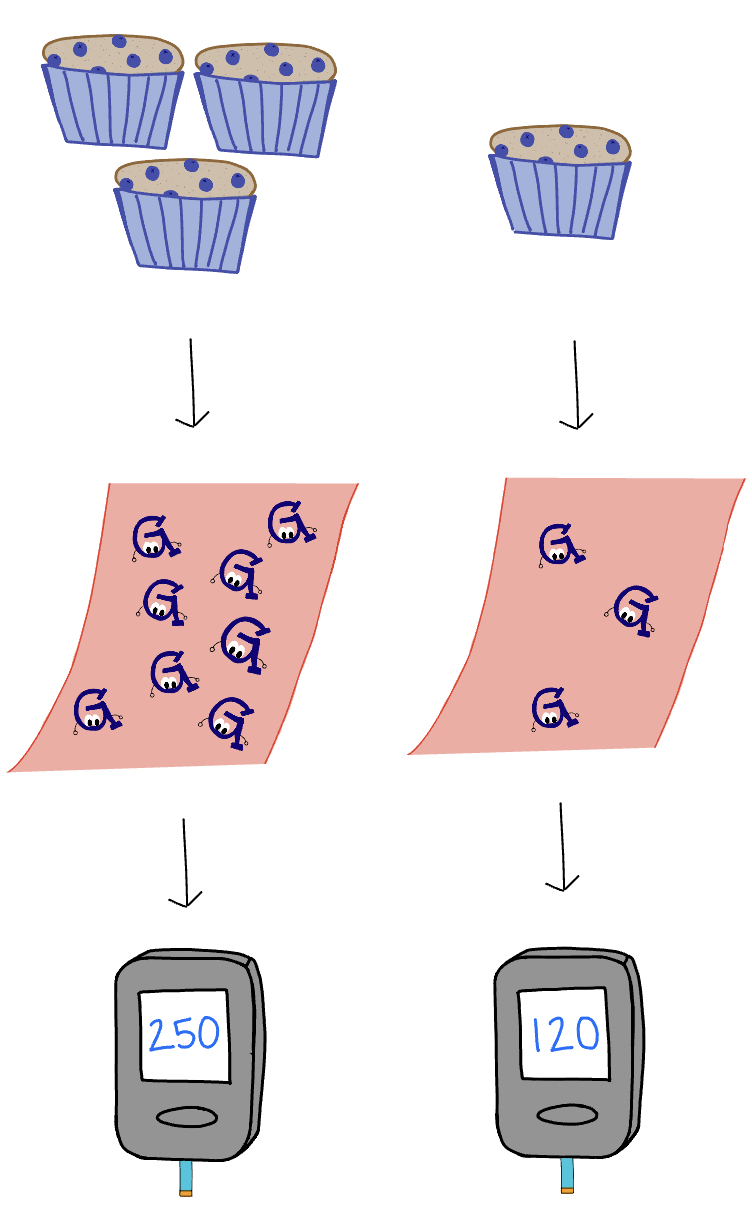
Carb counting helps you match the amount of insulin you need to the amount of carbohydrates you eat. Your healthcare provider will give you what is called an insulin ratio. This ratio indicates how many units of insulin you should bolus for a certain amount of carbohydrates.
To count carbs, you can use nutrition labels on packaged foods, food databases, or even learn to estimate the carbs in common foods. You’ll also need to learn how to measure your food portions, like using measuring cups or a food scale, to get a more accurate count.
Let’s practice carb counting with this cereal.
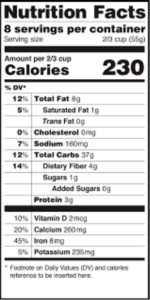
Serving Size: This is the amount of food that this nutrition label describes. So, all of the nutrition information about this cereal describes what is in ⅔ of a cup of cereal.
Total Carbohydrates (g): This number shows you all the carbohydrates in one serving of the food. It includes sugars, fiber, and other types of carbs. In one serving (⅔ cup) of cereal, there are 37g of carbohydrates.
Dietary Fiber (g): Fiber is a type of carbohydrate that your body doesn’t break down into sugar. It’s good for your digestive system and doesn’t affect your blood sugar like other carbs do. In one serving of cereal, there is 4g of fiber.
Sugars (g): This tells you how much of the total carbohydrates come from added sugars or natural sugars in the food. Too much sugar can cause a quick rise in blood sugar levels. In one serving, there is 1g of sugar.
Net Carbs (g): Net Carbs = Total Carbohydrates – Fiber. This is the number you will use to decide how much insulin to take. There are 33g of net carbs in this cereal because 37g – 4g = 33g.
Calculating Insulin Dose:
Now that we know how to use a nutrition label to count carbs, we can now learn how to calculate the right dose of insulin to take. For example, let’s say your insulin ratio is 1:10 (one unit insulin for every 10g of carbs). The first number, 1, is your insulin value and the second number, 10, is your carb value. Use these two formulas to find out how much to bolus if you eat a meal that has 32g of total carbohydrates and 2g of fiber.
- Total Carbohydrates – Fiber = Net Carbs
- (Net Carbs / Carb value) x Insulin value = Bolus
Let’s plug in the numbers for this example!
- 32 – 2 = 30
- (30/10) x 1 = 3
For a meal that has 32g of total carbs and 2 grams of fiber, and an insulin ratio of 1:10, you will bolus 3 units of insulin. Here are some more examples if you need more practice. Find the answers at the bottom of this module!
- 25g carbs, insulin ratio: 1 : 5
- 10g carbs, insulin ratio: 1 : 10
- 35g carbs, insulin ratio: 1 : 10
- 12g carbs, insulin ratio: 0.5 : 2
- 12g carbs, insulin ratio: 0.5 : 6
Estimates:
Here are a few different examples of foods that have 15 grams of carbohydrates (from the Academy of Nutrition and Dietetics):
- Bread: One slice
- Cereal: 3/4 cup of dry or 1/2 cup cooked
- Fruit: 1/2 cup of canned or juice, one small piece of fresh (such as a small apple or orange)
- Jelly: 1 tablespoon
- Pasta: 1/3 cup
- Pinto beans: 1/2 cup
- Rice: 1/3 cup
- Starchy vegetables: 1/2 cup of mashed potatoes, cooked corn, peas, or lima beans
- Tortilla: One 6-inch
Answers to Carb Counting Practice Problems:
- 5 units insulin
- 1 unit insulin
- 3.5 units insulin
- 3 units insulin
- 1 unit insulin
Leave a Reply
You must be logged in to post a comment.