Now that we have learned what insulin is, let’s dive a little bit deeper.
Carbohydrates are a type of energy found in foods like bread, candy, and rice. They are built out of many units of glucose. When you eat carbohydrates, your body needs insulin to help move the glucose from your blood into your cells where it is used for energy. Since your body doesn’t produce enough or any insulin, you have to take insulin as a medicine. There are two main types of insulin: short-acting and long-acting.
Most people with Type 1 diabetes use a combination of these different types to meet their needs. You might use long-acting insulin to keep your blood sugar stable throughout the day, and then use a rapid-acting or short-acting insulin before meals. This dose is called a bolus! Bolus doses are given when you need extra insulin when you eat or to fix high blood sugar levels.
There are also two main ways to take insulin. While some people use insulin injections, others like to use insulin pumps. Let’s learn about the difference between the two:
Insulin Injections:
Almost every person with Type 1 Diabetes starts by using insulin injections, even if they later switch to a pump. For insulin injections, you use a syringe or insulin pen to inject insulin into your body. The insulin is usually injected into the belly, thighs, lower back, upper buttocks, or upper arms. It’s important to change where you inject the insulin often to avoid developing hard lumps, or scar tissue, under your skin. These lumps can prevent insulin from entering your bloodstream.

With insulin injections, you need to manually measure the amount of insulin you need using a syringe or pen and then inject it into your body. The injections are typically given multiple times a day, depending on your specific insulin plan.
Insulin Pumps:
Insulin pumps are small devices that deliver insulin continuously throughout the day. They are made up of a pump that holds insulin and a thin tube called a cannula that is placed under the skin using a small needle. The pump is usually worn on a belt or kept in a pocket, and the cannula is attached to your body with a sticky patch.
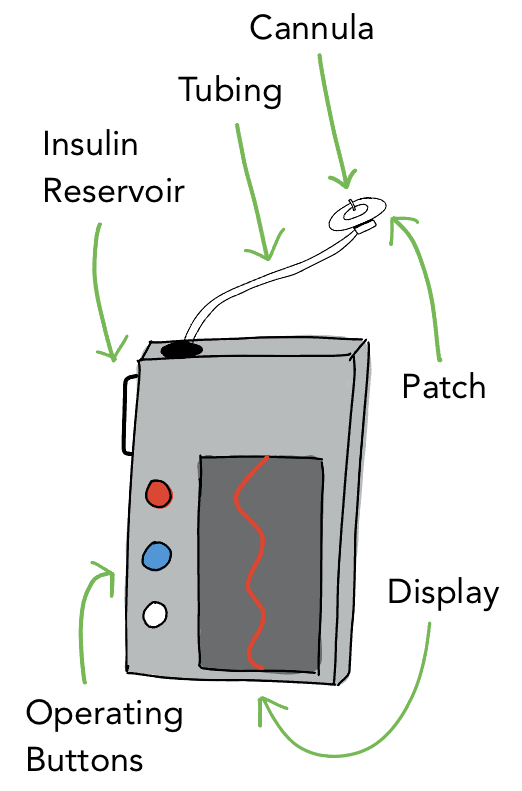
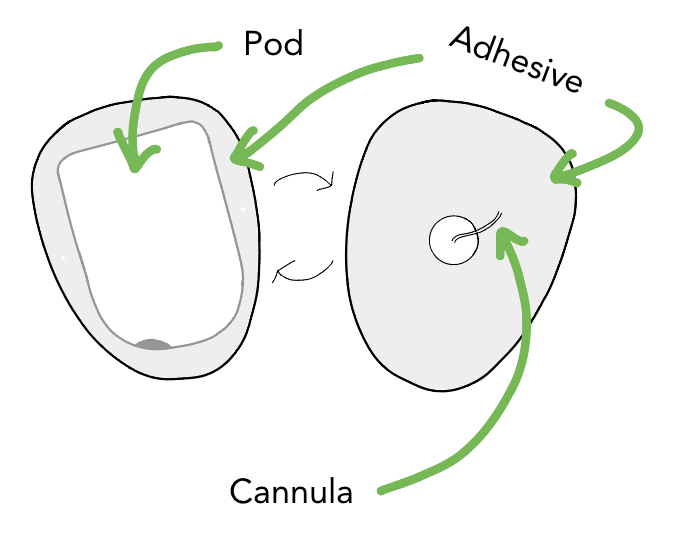
If you use a tubeless pump, it will sit stick directly to your body with an adhesive patch. The portion of the pump that sticks to your body is called a pod. The cannula sits directly under the pod, and the insulin reservoir is also contained within this pod. Both types of pumps can also connect to smart devices such as your phone! Since the tubeless system does not have a display, you can view information about insulin delivery on the connected smart device.
The pump delivers insulin in two ways: basal rate and bolus doses. The basal rate is a small, steady amount of insulin continuously to keep blood sugar levels stable between meals and overnight. Bolus doses are given when you need extra insulin when you eat or to fix high blood sugar levels. With an insulin pump, you can set the doses to match your needs.
With an insulin pump, you do not need multiple daily injections. Instead, you only need to change the infusion set and insulin reservoir every few days. The pump allows for more flexibility and can provide better control over blood sugar levels. However, you need to be comfortable with having a small device attached to your body all day.
Both insulin injections and insulin pumps are great ways to manage type 1 diabetes. You also have the flexibility to switch between the two options! The choice between the two depends on your preference, lifestyle, and recommendations from your doctor.
Leave a Reply
You must be logged in to post a comment.